The Language of Anatomy
This article is part I of a Anatomy & Physiology Series for healthcare professionals
Healthcare professionals need a universal language to describe where structures are located and how the body moves. Whether you're a PT, physician, nurse, or surgeon, everyone uses the same anatomical terminology to communicate. For example, instead of saying: "The pain is kind of around the inside of my upper arm." A physical therapist would say: "The patient reports pain on the medial aspect of the proximal humerus." At first, to me this is so complicated, I then understand it is intentionally to be precise, universal and international.
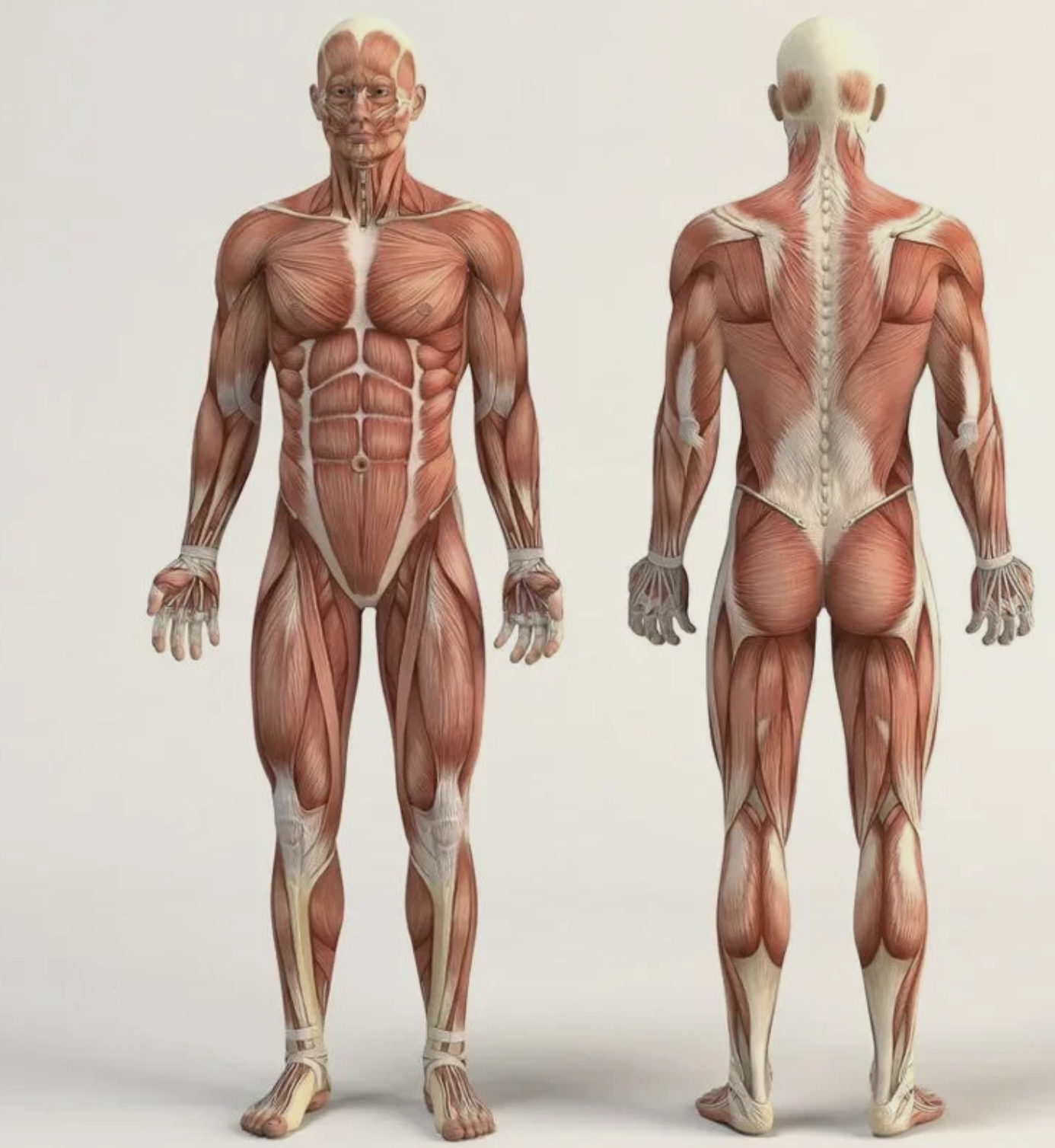
Anatomical Position
The anatomical position is the standard reference position used to describe every structure in the human body. Everyone assumes the body is in this position when using anatomical terms—even if the person is actually sitting, lying down, or upside down. The person is:
Standing upright
Facing forward
Head level
Eyes looking straight ahead
Arms relaxed at the sides
Palms facing forward
Fingers extended
Feet flat on the floor
Toes pointing forward
Common Mistake:
Many people think anatomical terms change with body position. For example, if a patient is lying down, the chest is still anterior because anatomical terms always refer to the standard anatomical position, not the person's current posture.
Directional Terms
Directional terms describe the location of one body structure relative to another.
| Term | Meaning | Example |
|---|---|---|
| Superior | Toward the head | Head is superior to the chest |
| Inferior | Toward the feet | Knee is inferior to the hip |
| Anterior | Toward the front | Sternum is anterior to the heart |
| Posterior | Toward the back | Spine is posterior to the sternum |
| Medial | Toward the body's midline | Nose is medial to the eyes |
| Lateral | Away from the body's midline | Ears are lateral to the eyes |
| Term | Meaning | Example |
|---|---|---|
| Proximal | Closer to where the limb attaches to the trunk | Elbow is proximal to the wrist |
| Distal | Farther from where the limb attaches to the trunk | Fingers are distal to the wrist For the upper limb, the attachment point is the shoulder. As you move away from the shoulder, the structures become more distal: Shoulder → Arm → Elbow → Forearm → Wrist → Hand → Fingers Since the fingers are farther from the shoulder than the wrist is, the fingers are distal to the wrist. |
| Term | Meaning | Example |
|---|---|---|
| Superficial | Near the body's surface | Skin is superficial to muscle |
| Deep | Farther from the body's surface | Bone is deep to muscle |
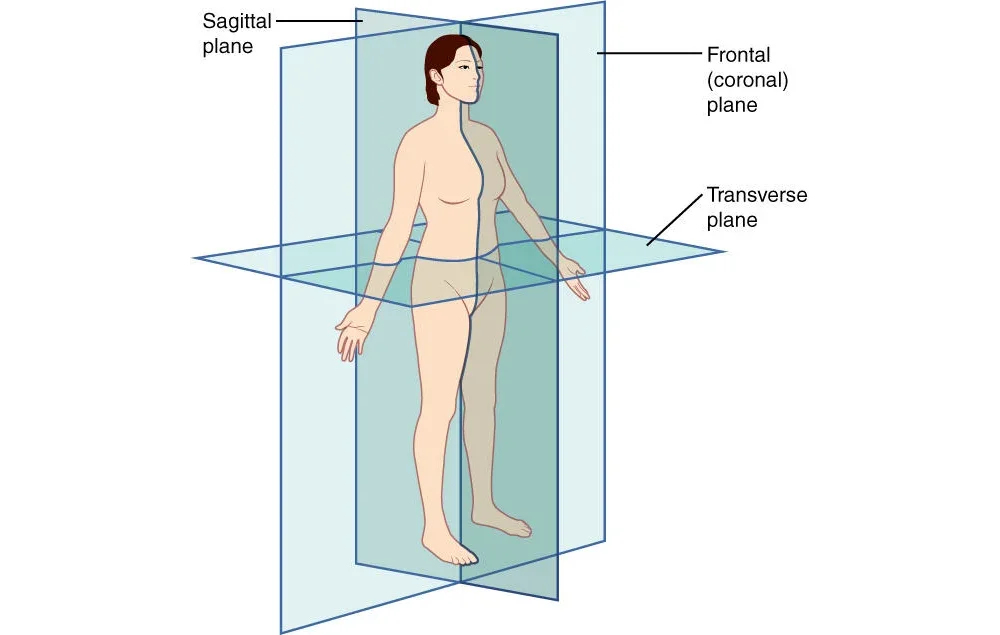
Body Planes
Body planes are imaginary lines that divide the body into sections. The three main types are the sagittal, coronal, and transverse planes
The sagittal plane divides the body into left and right portions.
The frontal (coronal) plane divides the body into front and back portions.
The transverse plane divides the body into upper and lower portions.
Doctors use body planes to understand images from CT scans and MRI scans, which show the body in slices from different directions. Surgeons also use these planes as a reference when locating organs and planning procedures.
In physical therapy and exercise science, body planes help professionals analyze how the body moves and helps therapists design safer exercises, identify movement problems, and prevent injuries by improving strength, balance, and coordination.
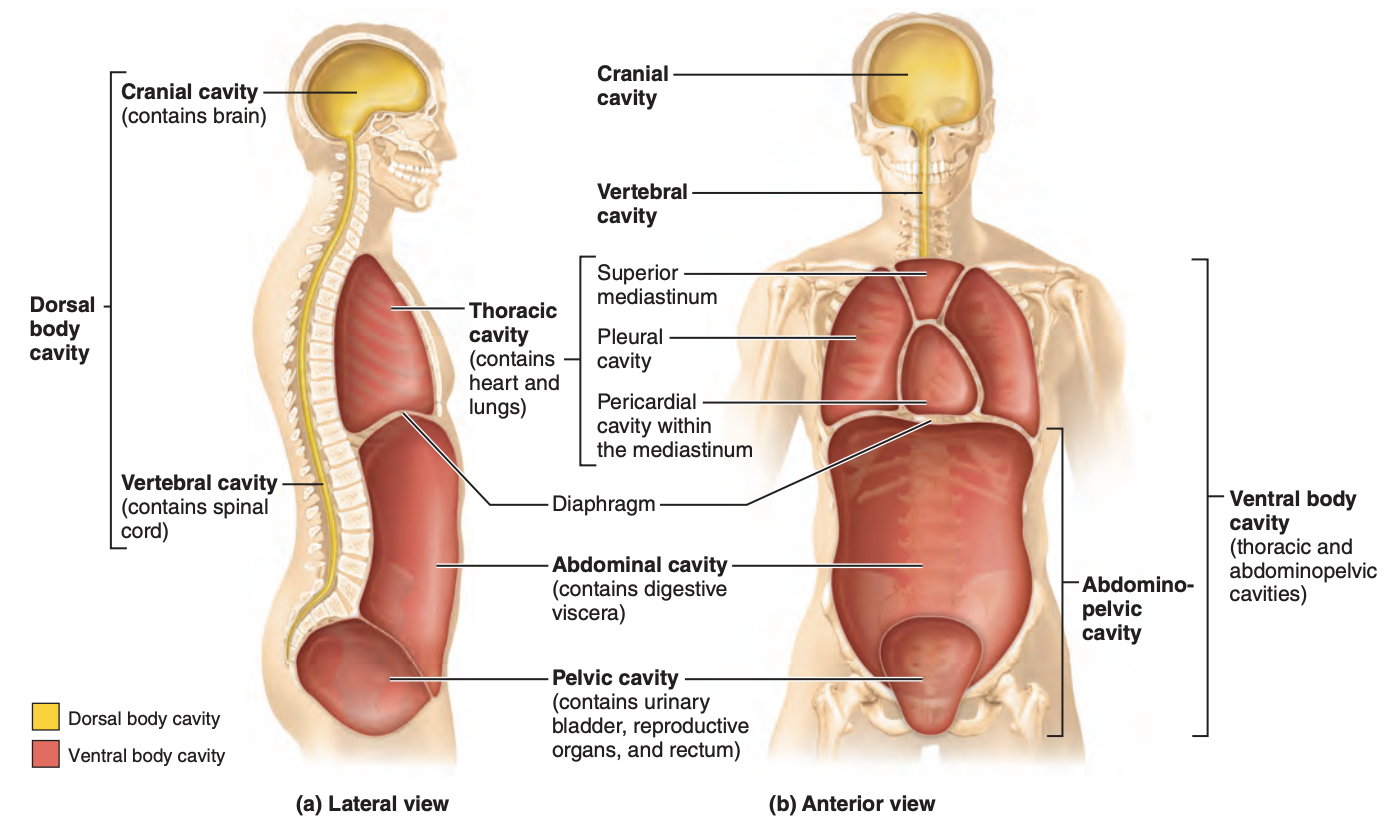
Body Cavities
Body cavities are spaces within the body that protect and contain internal organs. The dorsal cavity, located toward the back of the body, includes the cranial cavity, which contains the brain, and the vertebral cavity, which contains the spinal cord.
The ventral cavity, located toward the front of the body, contains many major organs. The thoracic cavity contains the heart and lungs, while the abdominopelvic cavity contains organs involved in digestion, urinary function, and reproduction.
